West Maui · Free · No lifeguard
Napili Bay, Maui
A quarter mile of sand between two lava points. Here is where to park, where the reef is, and when to stay out of the water.
- Cost
- Free
- Parking
- Street only
- Lifeguard
- None
- Best window
- Before 8am
Straight to the part you came for: parking & access, snorkeling, turtles, or is it safe to swim today.
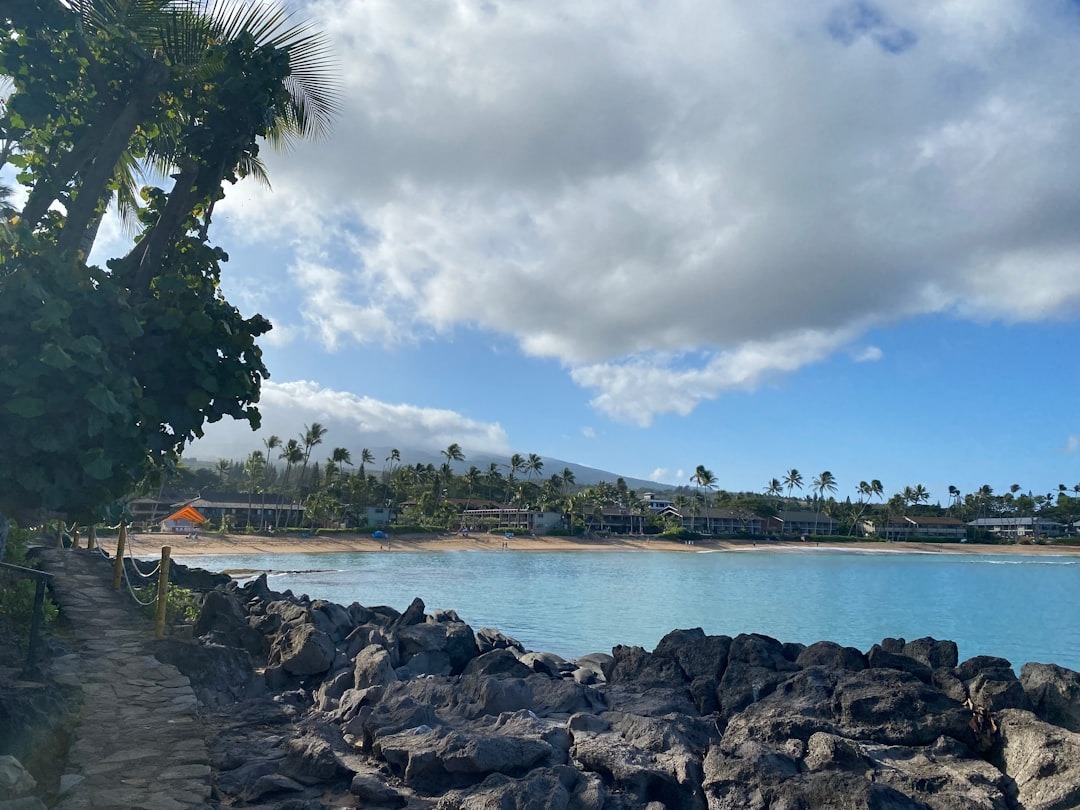
A quarter mile of sand with a rock wall at each end.
Napili Bay is a crescent. That is the whole design brief. Roughly a quarter mile of white sand curves between two lava points, and a fringing reef runs off both of them. Those two points do the work: they take the punch out of most of the swell before it reaches the sand, which is why families have been coming here for decades while other West Maui beaches are busy knocking people over.
The middle of the bay is clean sand — good swimming, thin on fish. The coral and the fish and the turtles are all at the edges, where the rock is. Understanding that one thing changes your whole visit: you do not snorkel Napili Bay by wading straight out from your towel. You enter from the sand and swim toward a point.
It faces roughly west, which means the sun sets over the water and Molokaʻi sits across the channel on a clear afternoon. It also means it is fully open to northwest swell in winter, and that is the part most guides skip.
Parking is the hard part. Here is the truth.
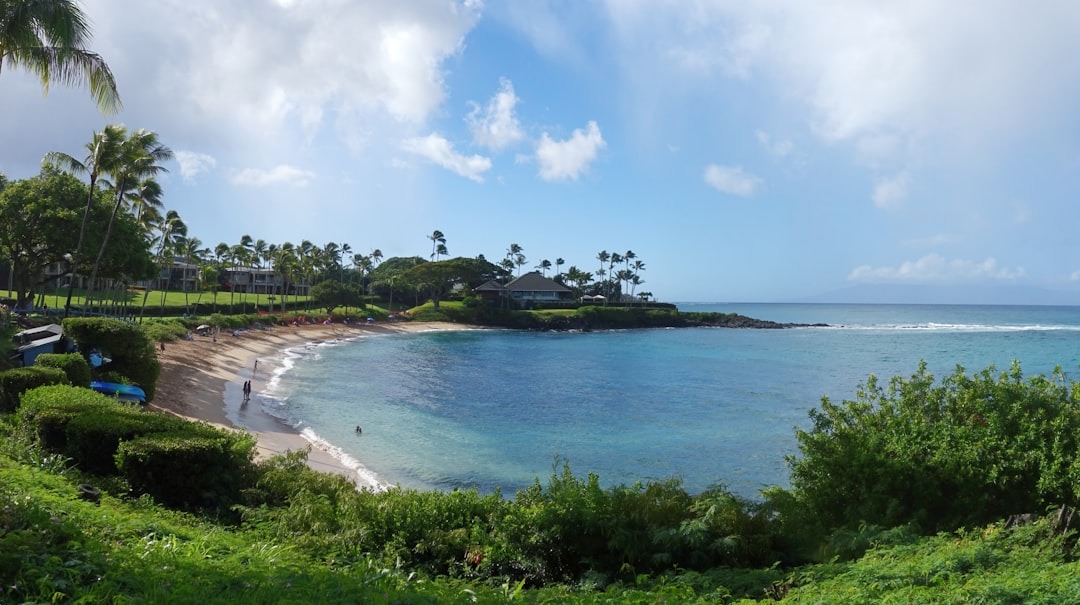
There is no parking lot. There has never been a parking lot. What there is: free curbside parking on the residential streets behind the bay — Napili Place and Hui Drive are the two with marked public beach access paths — plus a handful of spots along Lower Honoapiʻilani Road.
Could you roll up at 11am on a Saturday in July and find something? Sure. Should you plan on it? No. The reliable window is before about 8am. The second window opens mid-afternoon, around 2pm, as the morning crowd packs up. Midday is when people end up circling the neighbourhood for twenty minutes and driving to Kapalua instead.
The beach itself is public — every beach in Hawaii is, below the high-water mark, and the state protects shoreline access in law. The resorts own the land behind the sand, not the sand. Use the marked access paths and nobody has anything to say to you.
The full parking and access guide — street by street covers each access point, the walk from the car, and why the resort and restaurant lots are not an option.
Reef at the edges, honu on the rocks.
Snorkelling here is a beginner reef and an honest one. Along the rock at either point you get tangs, butterflyfish, wrasse, parrotfish chewing at the coral, the occasional eel tucked into a crack. It is not Molokini. It does not need to be — you can walk in from the sand, and the water is often calm enough that a nervous first-timer can actually enjoy it.
Green sea turtles are regulars. They come in to graze on algae along the rocky margins, and on a calm morning you can watch one work its way along the shallows for twenty minutes. Hawaii asks you to stay at least ten feet away, in the water and on the sand. If one swims at you, hold still and let it pass — the rule is about your behaviour, not the turtle’s.
Two rules that will save your day: go in the morning, before the trades put chop on the surface, and stay inside the bay. Past the points the water is unprotected, the currents are stronger, and there is nobody watching.
More depth: where the reef actually is and how to find the honu without breaking the law.
Morning for the water. Evening for the view.
Napili Bay runs on the same clock as most of leeward Hawaii. It glasses off overnight and stays calm and clear until the trade winds build through the morning; by early afternoon there is texture on the surface and visibility drops. So: swim and snorkel early, sunbathe late, and take the sunset seriously — the bay faces west and the light goes gold across the whole crescent.
Seasonally it is two different beaches. Roughly May through September is the calm, clear, family version. Roughly November through March, north and northwest swell reaches this coast and the bay can go from glassy to genuinely dangerous inside a day.
Winter has its own reward, though: humpbacks are in West Maui waters roughly December through April, peaking in January and February. Bring binoculars and scan the channel from the sand.
| Window | Summer (May–Sep) | Winter (Nov–Mar) |
|---|---|---|
| Sunrise – 9am | Best of the day. Calm, clear, parking available. | Calmest window, but check the swell first. |
| 9am – 2pm | Busy. Wind builds, visibility drops, no parking. | Swell often peaks. Watch before you commit. |
| 2pm – sunset | Crowd thins, parking reopens, sunset is the payoff. | Whale-watching from the sand. Water often out. |
Safety
Before you get in the water
- 01There is no lifeguard at Napili Bay. Nobody is watching. The nearest lifeguarded beach is D.T. Fleming, north past Kapalua.
- 02If waves are breaking inside the bay — not just out at the points — stay on the sand. That is the signal, and it is a reliable one.
- 03Shore break can be steep enough to knock you down at the water’s edge. Time your entry between sets rather than walking straight in.
- 04Rip currents form near the rocky points. A channel of choppy, sediment-streaked water moving seaward is the tell. Do not swim through it.
- 05Never swim or snorkel past the points. Outside the bay there is no shelter, stronger current, and nobody to notice.
- 06Brown or murky water means stay out. Hawaii’s standard advice is to avoid the ocean for about 72 hours after heavy rain.
- 07Maui County requires mineral-only sunscreen — zinc oxide or titanium dioxide. Chemical sunscreens are prohibited countywide.
- 08Green sea turtles are federally protected. Stay at least ten feet away, in the water and on the sand. Do not touch, chase, feed, or block one.
The full breakdown — season by season, what to look for before you get in, and the honest answer to “is it safe today” — is on safety & conditions.
Getting there
Where it is.
Napili sits on Lower Honoapiʻilani Road on West Maui, between Kapalua to the north and Kahana to the south — roughly six miles up the coast from Lahaina town. Coming from Kahului or the airport, you take Honoapiʻilani Highway north and drop down onto the lower road.
20.995° N, 156.667° W
Everything else worth seeing is close. Honokeana Cove is a couple of minutes south, Kapalua Bay a few minutes north, Honolua Bay and Slaughterhouse about fifteen — the nearby beaches guide covers the lot.
Free PDF · 12 pages
Napili Bay: The Field Guide.
Everything on this site, folded into one PDF you can keep on your phone — plus the annotated map, the fish strip, and the day plan that only live in the download. One bay, done properly.
- The annotated bay map — both reef fingers, the sand entry, and every public access path
- The parking windows, the snorkel plan, and an hour-by-hour perfect Napili day
- The when-not-to-swim checklist, the honu rules, and the sunscreen law nobody tells you about
Local Favorites
Where we send people around the bay.
Short list, all within a few minutes of the sand, all verified as trading this year. No sponsored fluff, no place that closed in 2024 and still shows up on somebody’s “best of Maui” post.
More on the food: where to eat near Napili Bay.
FAQ
Questions people actually ask
Is Napili Bay a public beach?
Yes. Every beach in Hawaii below the high-water mark is public, and Napili Bay has marked public access paths from the street. The resorts sit on the land behind the sand, not on the sand itself — the beach is yours.
Where do you park at Napili Bay?
There is no public parking lot. Free street parking sits at the ends of Napili Place and Hui Drive, both of which have public beach access paths, plus some spots along Lower Honoapiilani Road. It fills early — arrive before about 8am or come back after 2pm.
Is Napili Bay good for snorkeling?
Yes, in the right conditions. The coral is concentrated at the rocky points at each end of the crescent, with clean sand in the middle. Enter from the sand and swim toward either point. Mornings are calmest and clearest; winter swell can shut it down entirely.
Are there sea turtles at Napili Bay?
Green sea turtles (honu) are seen regularly along the rocky margins at both points. Hawaii asks you to stay at least 10 feet away, in the water and on the sand. Do not touch, chase, feed, or block the path of a honu.
Is there a lifeguard at Napili Bay?
No. Napili Bay has no lifeguard tower and no lifeguard on duty. If you want a lifeguarded beach nearby, D.T. Fleming Beach Park up past Kapalua has one.
Is Napili Bay safe to swim in?
In calm summer conditions it is one of the gentler swimming bays on West Maui, which is why families love it. In winter, northwest swell wraps in and creates a steep shore break and rip currents near the points. Look before you go in: if waves are breaking inside the bay or the water is brown, stay out.
What is the best time of day to visit Napili Bay?
Early morning for calm, clear water and a parking spot. Late afternoon into sunset for the view — the bay faces west and the sun drops toward Molokai.
Can you see whales from Napili Bay?
In season, yes. Humpbacks are in West Maui waters roughly December through April, with January and February the peak. Bring binoculars and scan the channel from the sand.