Is Napili Bay safe to swim? It depends on the day.
In summer this is one of the gentler swimming bays on West Maui, which is why families love it. In winter, northwest swell wraps in and it is a different beach entirely. Both answers are true. Here is how to tell which one you are looking at.
- Lifeguard
- None
- Calm season
- May – Sep
- Swell season
- Nov – Mar
- After rain
- Wait 72h
Napili Bay has a reputation as the safe one. It mostly deserves it — the reef and the two lava points take the force out of most swell before it reaches the sand, and on a calm summer morning the water inside the crescent is about as forgiving as open ocean gets on this island.
But there is no lifeguard. Nobody is watching, nobody is going to blow a whistle at you, and nobody is coming quickly if it goes wrong. That changes the calculation, and it is the single most important fact on this page.
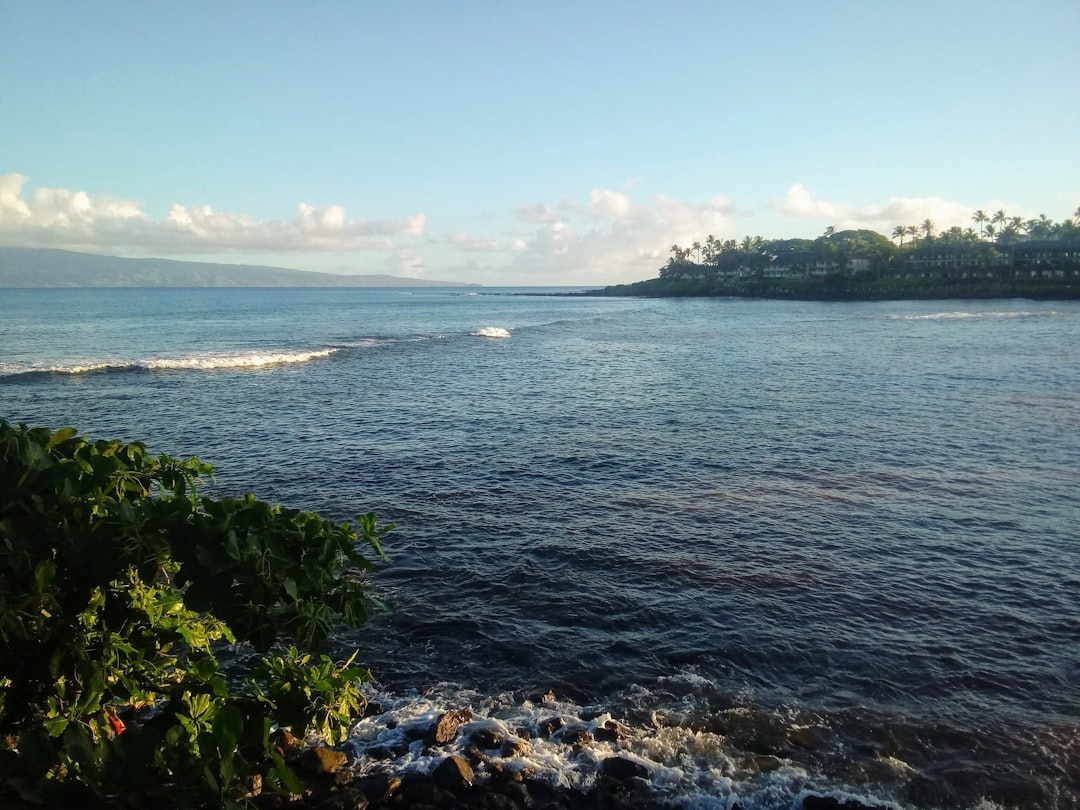
Stand there for two minutes before you get in.
You do not need to be able to read a swell forecast. You need to be willing to stand on the sand and watch the water for the length of two wave sets before you commit, which is about ninety seconds and which almost nobody does.
Where are the waves breaking? If whitewater is only out at the points and the middle of the bay is rolling gently onto the sand, that is the normal, good version of Napili Bay. If waves are breaking inside the bay, the shelter has been overwhelmed and you should stay on the sand. That single observation is the most reliable safety signal here.
What colour is the water? Turquoise and clear means go. Brown, murky, or streaked means runoff, which means bacteria and no visibility. Skip it.
Is anything moving out? A channel of choppy, sediment-coloured water tracking steadily seaward — usually near the rocky points — is a rip. It will not look dramatic. It will look like the calmest strip of water in the bay, which is exactly why people swim into it.
Same bay, different beach.
Roughly May through September. Trade-wind pattern, small surf, calm mornings, good visibility. This is the family-beach version and it is genuinely lovely. Get in early, get out when the wind comes up.
Roughly November through March. North and northwest swell reaches this coast, and Napili faces into it. The shore break steepens — steep enough to knock an adult down at the water’s edge, which is where most beach injuries in Hawaii actually happen — and rips form near the points. Visibility drops. Some days it is fine. Some days it is not, and the difference can arrive overnight.
The mistake is treating a winter trip like a summer trip because the guidebook said Napili Bay is calm. It is calm relative to the open coast. That is not the same as safe on a big day.
Free PDF · 12 pages
The field guide carries the when-not-to-swim checklist, laminated-simple. Free PDF.
Your sunscreen is probably illegal here.
Most visitors know Hawaii banned sunscreens containing oxybenzone and octinoxate. Far fewer know that Maui County goes further: the county requires mineral-only sunscreen — zinc oxide or titanium dioxide — and prohibits the sale, distribution and use of non-mineral chemical sunscreens countywide.
That means the bottle you bought at home probably does not comply, even if it says “reef safe” on the front. Reef safe is a marketing phrase. Mineral is a chemistry one. Read the active ingredients: if it is not zinc oxide or titanium dioxide, leave it in the case and buy one here.
Safety
Stay out of the water if any of these are true
- 01Waves are breaking inside the bay rather than only at the points.
- 02The water is brown, murky, or streaked with sediment.
- 03It has rained hard in the last 72 hours.
- 04You can see a channel of choppy water tracking steadily out to sea.
- 05You are not a confident ocean swimmer and there is any shore break at all.
- 06You would be getting in alone, at dusk, or out of sight of the sand.
None of this is a substitute for looking at the ocean in front of you. There is no lifeguard at Napili Bay — the judgement is yours, so make it before you are wet.
FAQ
Safety questions
Is Napili Bay safe to swim in?
It depends entirely on the day. In calm summer conditions the reef and the two points shelter the bay and it is one of the gentler swimming beaches on West Maui. In winter, northwest swell wraps in and produces a steep shore break and rip currents near the points.
Is there a lifeguard at Napili Bay?
No. There is no lifeguard at Napili Bay. The nearest lifeguarded beach is D.T. Fleming Beach Park, north past Kapalua.
Is Napili Bay dangerous in winter?
It can be. Roughly November through March, north and northwest swell reaches this coast. When it does, the shore break gets steep enough to knock people down at the water’s edge and rips form near the rocky points. Whitewater breaking inside the bay is the signal to stay on the sand.
How do I know when not to get in the water?
Stay out if waves are breaking inside the bay rather than only at the points, if the water is brown or murky, if you can see a channel of choppy sediment-streaked water moving seaward, or if you are not a confident ocean swimmer and anyone else in the water is struggling to stand.
Is the water quality at Napili Bay safe?
Generally yes, but Hawaii’s standard advice applies statewide: avoid the ocean for about 72 hours after heavy rain, when runoff carries bacteria into nearshore water. Brown water is a reason to skip the swim.
What sunscreen is allowed on Maui?
Maui County requires mineral-only sunscreen — zinc oxide or titanium dioxide. Non-mineral chemical sunscreens are prohibited countywide, a stricter rule than Hawaii’s statewide ban on oxybenzone and octinoxate. Buy mineral, or buy it on Maui.